

What Makes A Forest Sustainable
But put, we cannot survive on this planet without forests. In a sense, they exhale for the Globe, arresting carbon dioxide from our atmosphere, and producing the oxygen nosotros require in return. And by storing that carbon, forests help to regulate the global climate, absorbing nearly forty pct of the fossil-fuel emissions we humans produce.
Forests also provide fuel for cooking and warmth, medicinal plants, nutrient, wildlife habitat, clean water, spiritual and cultural touchstones, and for many, the means to earn a living. Approximately 70 per centum of terrestrial animals and plants brand their homes in forests, while more than 25 percent of the world'due south people—almost 1.vi billion—rely on forest resources for their livelihoods, with 1.two billion of them using trees to generate food and greenbacks. The economic value of these ecosystem services has been estimated at $33 trillion per year, twice the Gdp of the Usa.
Sign up for useful tips to green your life and protect our planet.
Yet despite all that forests do for us, they keep to be sacrificed to unsustainable human consumption—at our own peril. Each year nosotros lose 32 million acres (xiii million hectares), 26 times the size of the Chiliad Coulee, or sixty acres per infinitesimal. To regenerate the resources we're already consuming, we'd need 1½ Earths, yet our demand is however growing. No affair how y'all slice it, the math but doesn't add up. Our current consumption levels cannot be sustained.
As long equally there are homo beings on this planet, in that location will be a demand for forest, lurid, and other woods resource, and at that place will be businesses that try to meet that demand. Furthermore, those people who live and work in forests volition always need to feed their families and put a roof over their heads; the stark inequities in our global economy increase the economic desperation that fuels illegal logging and poaching. The only realistic manner to conserve our forests is to utilize sustainable wood management practices—a conservation-and-livelihoods approach that the Rainforest Brotherhood has led since the belatedly 1980s, and 1 that'south already proven successful on about half a billion acres of land effectually the earth.
What does "sustainable forestry" really mean?
For many, the term "sustainable forestry" may seem similar an oxymoron. How tin can logging always exist sustainable when, by definition, information technology requires that trees be cut down? The consummate answer is circuitous, but if we had to reduce it to ane word, information technology would be "residual." The authentication of sustainable forestry, from a purely ecological perspective, is the extent to which forestry practices mimics natural patterns of disturbance and regeneration. Sustainable forestry balances the needs of the environment, wildlife, and wood communities—supporting decent incomes while conserving our forests for futurity generations. There are many practical steps that a community or business can have to protect the health and longevity of a forest while yet profiting from the production and sale of timber and other forest products, such as nuts, fruits, oils, and plants.
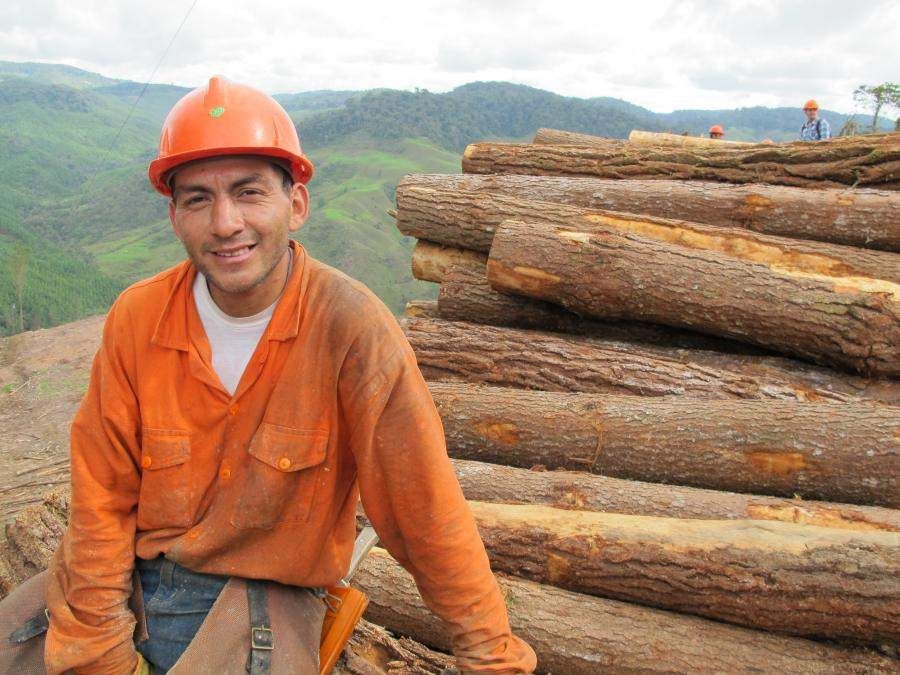
In 1993, the Rainforest Brotherhood co-founded the Wood Stewardship Council (FSC), an international body that develops and maintains the most globally respected standard for managing forests, and nosotros certify forestry businesses that come across the standard's strict environmental, social, and economical criteria. We as well award FSC Chain-of-Custody (CoC) certificates for the tracking of certified wood and other raw materials from forest to manufacturer to store shelf, confirming that an item that bears the FSC and Rainforest Alliance Certified trust marks actually contains certified products. These seals let conscientious consumers an piece of cake way to spot and back up responsible producers.
Beyond sustainable forest certification, the Rainforest Alliance too provides preparation to forest communities around the world in methods designed to conserve forests, safeguard wildlife, protect workers, and—critically—to support their efforts to earn a living as responsible forest stewards. We link them to buyers who are interested in sourcing certified forest products; offer preparation in business skills, such equally bookkeeping and other organizational tasks; and assist them in obtaining financing then that they can reinvest in their enterprises and proceed to prosper. The Rainforest Brotherhood is the leading FSC certifier of forests managed by communities and indigenous groups.
The global FSC standard is comprised of ten principles that cover a range of ecology, social, and economic criteria. Although there are regional variations in how the standard is applied—to address the unique needs of forests, peoples, and economies in different parts of the earth—the bones tenets of sustainable forestry remain the same:
Establish protected areas & conserve biodiversity
A woods's biodiversity—including its h2o resources, soils, plant species, and creature populations—must be conserved. This means that wood managers minimize erosion and protect waterways; avoid the use of chemical pesticides; properly dispose of waste material; conserve native tree species and maintain genetic diversity on their state; fix aside role of their properties as protected areas where logging is prohibited (including forestland that is steeply sloped, provides habitat for critical wild fauna species, and/or serves a culturally or spiritually meaning function in the local community); and take other steps to ensure the integrity of the forest. Researchers accept found that UNESCO Earth Heritage Sites and other protected areas benefited from having FSC/Rainforest Alliance Certified forestry businesses equally neighbors. And separate studies in Africa and Asia found that certified enterprises did a better job than their noncertified peers of protecting peachy apes and other mammals.
Prevent forest conversion & protect High Conservation Value Forests (HCVF)
The FSC standard requires that forest managers protect natural forests against deforestation, reduce the take a chance of fires, and accept detail care to protect "high conservation value forests." The latter term is used to depict forests that incorporate significant concentrations of biodiversity; are located in or include rare or endangered ecosystems; are critical providers of ecosystem services; or are key to meeting the basic needs or defining the cultural identity of wood communities. In Guatemala's culturally and ecologically pregnant Petén region, researchers constitute that over a twenty-twelvemonth period, actively managed FSC-certified forests experienced substantially lower rates of deforestation than nearby protected areas, and woods fires only affected 0.1 percent of certified land surface area, compared to 10.4 percent of protected areas.
Have a direction programme & harvest accordingly
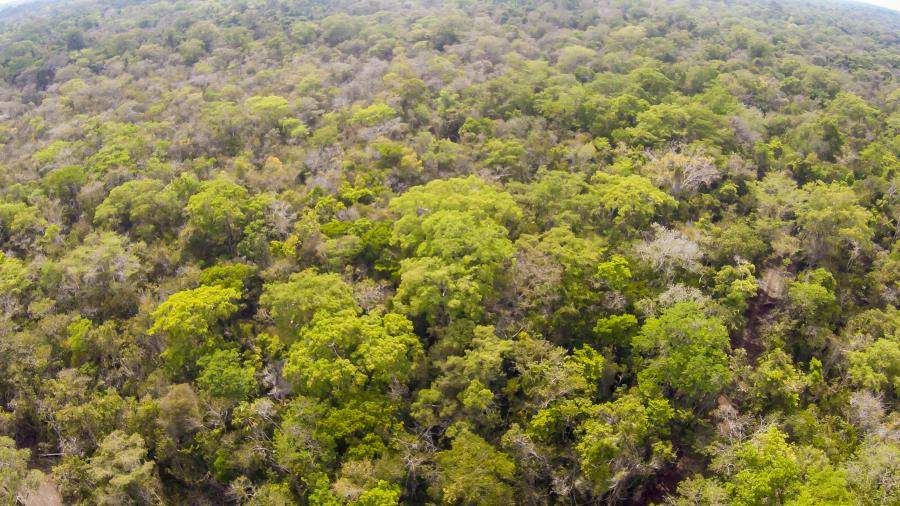
Logging activities tin accept many forms, from selective harvesting to express, pocket-sized clear-cutting, which, in temperate forests, can mimic natural disturbances such as fires or landslides. To go FSC-certified, forestry operations must put into place a clearly mapped direction plan that specifies the number of trees that can exist harvested per acre, and the frequency at which this can occur, based on the growth and regeneration rates of the species plant in that ecosystem. The goal is to harvest in such a style that allows these species the chance to regenerate, and ensures that the wood's overall ecological health is maintained, restored, or even enhanced.
Tree plantations take a function to play
Sustainable forestry focuses on keeping natural forests standing, and only in extremely limited cases may a tree plantation that resulted from forest conversion afterwards Nov 1994 even utilise for FSC certification. Nevertheless, the establishment of plantations on already deforested or degraded land can amend the health of an ecosystem and help to run across some of the need for forest products, taking pressure off of natural forests. To earn FSC certification, plantations must operate co-ordinate to a management programme that promotes the protection, restoration, and conservation of natural forests.
Employ reduced-touch on logging techniques
Many people associate logging with the image of a bulldozer leaving behind a denuded landscape, but it is possible to harvest timber without causing collateral harm to other parts of a woods. Reduced-touch on techniques allow loggers to fell and extract trees in a style that reduces harm to other copse in the stand up. This approach also minimizes erosion, waste, and carbon emissions.
Railroad train employees & keep them good for you
A forestry business that does non protect its workers is not only unethical, just as well unsustainable. Well-trained and healthy employees are essential to ensuring that these enterprises role safely and efficiently. In an exam of community-run forestry businesses in Brazil, certified enterprises did a far better chore of protecting their workers than their noncertified peers. Members of certified enterprises were 4 times more probable to have taken part in a safety grade; 94 pct of these businesses offered regular medical exams to their workers; all of the certified enterprises properly washed and stored their protective gear; and 100 percent—four times as many every bit noncertified enterprises—offered medical attention to their employees when they were injured on the job.
Respect local communities & foster economic development
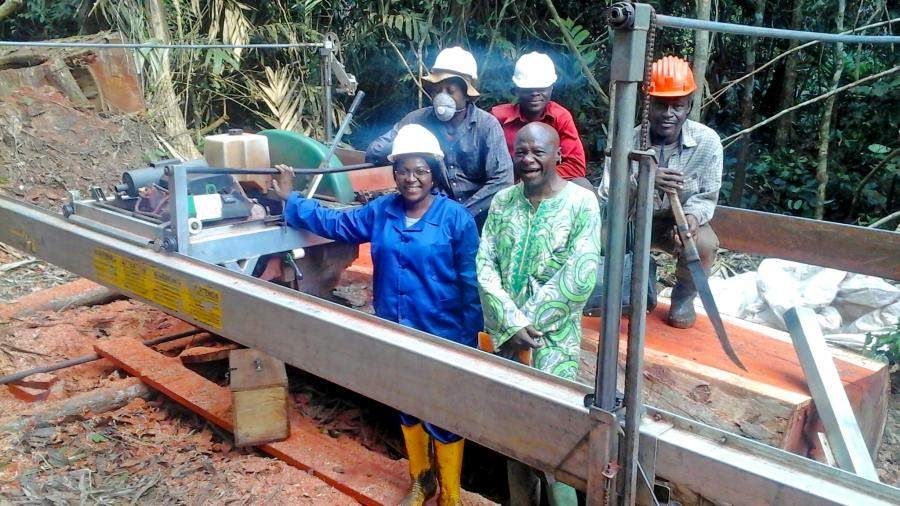
For forestry businesses to be sustainable, they must operate in harmony with their surroundings. This means more than just the natural ecosystems in which they are located; it too applies to the human neighbors with which they co-be. It means that a certified business must contribute to the social and economical evolution of a community by offering its members opportunities for employment and compensating ethnic groups for the traditional noesis that they share regarding wood species and operations. These are not only socially responsible steps, but they also benefit the environment. Providing jobs to local people, for case, tin eliminate the incentive to engage in profitable simply subversive activities such as wildlife poaching and illegal logging.
Boost income and profitability
Sustainable forestry should have a positive economic impact on its practitioners. The steps that help a business earn certification are the same that require the active management of its forestland, teach employees how to piece of work safely and efficiently, and reduce staff turnover, so it'due south no surprise that these steps can also lead to economic growth. Despite the earnings variations reported, a study of 11 FSC-certified forestry enterprises effectually the world constitute that FSC-certified woods generated price premiums of upwards to 50%, and the enterprises that benefited the most tended to be customs and small-scale producers in the tropics. And in Mexico, a big FSC-certified community forestry enterprise that received technical assistance from the Rainforest Alliance increased its production volume, while staying within the parameters for sustainable harvesting; created an additional 286 jobs (a 12 percent increment over the baseline); and earned a 10 per centum price premium for the wood that it sold to a certified buyer.
Support Our Work
Create a world where people and the planet prosper together.
DONATE TODAY

What Makes A Forest Sustainable,
Source: https://www.rainforest-alliance.org/insights/what-is-sustainable-forestry/
Posted by: edwardsloges1978.blogspot.com
0 Response to "What Makes A Forest Sustainable"
Post a Comment